Introduction
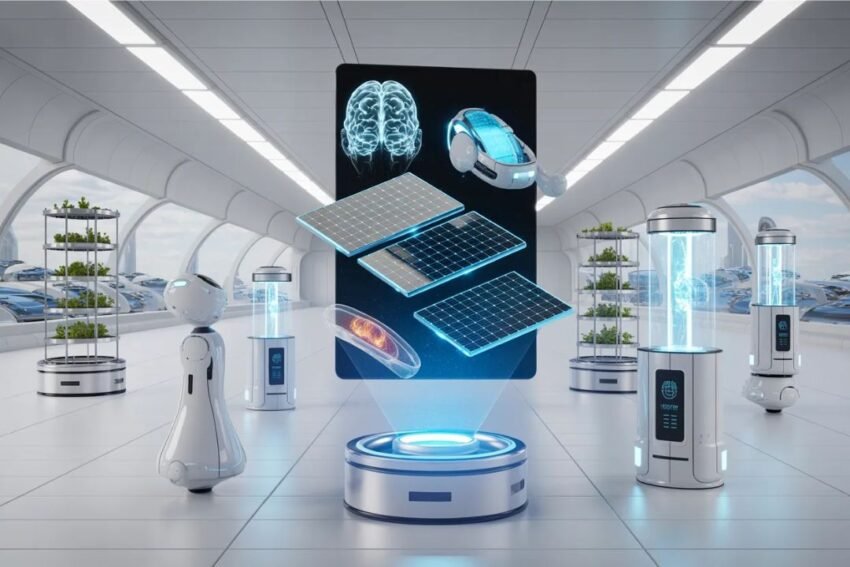
Human civilization has always progressed through innovation. From the invention of the wheel to the creation of the internet, technological breakthroughs have continually reshaped how people live, communicate, and work. Today, the world stands at the edge of another technological revolution driven by next-generation innovations that promise to transform nearly every aspect of human life.
Rapid advancements in artificial intelligence, robotics, biotechnology, renewable energy, and transportation are opening doors to possibilities that once seemed impossible. These emerging technologies are not only designed to improve convenience and productivity but also to solve some of the world’s biggest challenges, such as climate change, healthcare accessibility, urban congestion, and food security.
Next-generation inventions are expected to redefine industries, create new economic opportunities, and significantly enhance the quality of life for billions of people around the globe. As technology continues to evolve, the future of human life will be shaped by intelligent systems, sustainable solutions, and advanced automation.
This article explores the most important future inventions and technological innovations that are likely to shape human life in the coming decades.
Artificial Intelligence and Intelligent Systems
Artificial intelligence (AI) is one of the most powerful technologies shaping the future. AI refers to machines and computer systems capable of performing tasks that normally require human intelligence, such as learning, reasoning, problem-solving, and decision-making.
In the coming years, AI systems will become more advanced and integrated into everyday life. Intelligent assistants will be able to manage schedules, automate household tasks, and provide personalized recommendations based on individual preferences.
In healthcare, AI will play a crucial role in diagnosing diseases and predicting potential health problems before symptoms appear. Advanced algorithms can analyze medical images, patient histories, and genetic information to detect diseases such as cancer at earlier stages.
AI is also transforming industries like finance, manufacturing, agriculture, and transportation. Smart machines can analyze massive amounts of data in seconds, enabling businesses to make better decisions and improve efficiency.
As AI technology evolves, it will become an essential tool for solving complex global challenges and enhancing human capabilities.
Smart Cities and Intelligent Infrastructure
As the global population continues to grow, cities are becoming more crowded and complex. To address these challenges, many countries are investing in smart city technologies that use data and digital systems to improve urban living.
Smart cities rely on interconnected devices and sensors that collect real-time information about traffic, energy consumption, weather conditions, and public services. This data is then analyzed to optimize city operations and improve efficiency.
For example, intelligent traffic management systems can reduce congestion by automatically adjusting traffic signals based on real-time traffic flow. Smart parking systems can guide drivers to available parking spaces, saving time and reducing fuel consumption.
Energy management is another key feature of smart cities. Smart grids distribute electricity more efficiently and allow better integration of renewable energy sources such as solar and wind power.
Smart buildings equipped with automated lighting, heating, and cooling systems can significantly reduce energy waste. Waste management systems can also use sensors to monitor garbage levels and schedule collection only when needed.
These technologies not only improve convenience but also help create more sustainable and environmentally friendly cities.
Advanced Healthcare and Biotechnology
Healthcare is another area where next-generation innovations are expected to make a profound impact. Emerging technologies are enabling doctors and researchers to diagnose diseases faster, develop more effective treatments, and improve patient care.
One of the most promising developments is personalized medicine. Instead of using a one-size-fits-all approach, doctors can analyze a patient’s genetic information to design treatments tailored specifically to that individual. This approach increases treatment effectiveness and minimizes side effects.
Biotechnology is also making remarkable progress in gene editing technologies. Scientists are exploring ways to correct genetic disorders by modifying faulty genes. This could potentially cure diseases that were previously considered untreatable.
Another exciting innovation is the development of wearable health devices. These devices can continuously monitor vital signs such as heart rate, blood pressure, sleep patterns, and blood oxygen levels. Real-time health monitoring allows doctors to detect potential health problems early.
Nanotechnology is another groundbreaking field. Tiny nanobots may one day travel through the human body to deliver medicine directly to diseased cells, repair damaged tissues, and destroy harmful bacteria or viruses.
These advancements could dramatically increase life expectancy and improve the overall quality of healthcare worldwide.
Sustainable Energy and Environmental Technologies
One of the biggest challenges facing humanity today is climate change. To combat environmental problems and reduce dependence on fossil fuels, scientists are developing innovative clean energy technologies.
Solar energy continues to be one of the fastest-growing renewable energy sources. Future solar panels are expected to become more efficient, affordable, and versatile. Some researchers are even working on solar panels that can be integrated into windows and building materials.
Wind power is also expanding rapidly. Modern wind turbines are capable of generating large amounts of electricity, and offshore wind farms are being developed to capture stronger ocean winds.
Energy storage technology is another important innovation. Advanced battery systems are being designed to store renewable energy for longer periods, ensuring a stable electricity supply even when sunlight or wind is unavailable.
Hydrogen energy is also gaining attention as a clean fuel source. Hydrogen-powered systems produce only water as a byproduct, making them an environmentally friendly alternative to fossil fuels.
Together, these technologies are helping build a sustainable energy future that can support global economic growth while protecting the planet.
Future Transportation Technologies
Transportation is undergoing a major transformation as engineers develop new systems that are faster, safer, and more efficient.
One of the most exciting developments is autonomous vehicles. Self-driving cars use sensors, cameras, and artificial intelligence to navigate roads without human drivers. These vehicles could significantly reduce traffic accidents caused by human error.
Electric vehicles are also becoming more popular as battery technology improves. Electric cars produce zero emissions and require less maintenance compared to traditional gasoline vehicles.
Another revolutionary transportation concept is high-speed tube travel systems such as vacuum-based transportation networks. These systems allow passenger pods to travel at extremely high speeds through low-pressure tubes, dramatically reducing travel times between cities.
Urban air mobility is another emerging concept. Electric flying vehicles and air taxis could provide fast transportation within crowded cities, reducing traffic congestion on roads.
These innovations could reshape the global transportation network and make travel more efficient and environmentally friendly.
Robotics and Automation
Robotics and automation technologies are rapidly advancing and are expected to play a major role in the future workforce. Robots are already widely used in industries such as manufacturing, logistics, and construction.
Next-generation robots will be more intelligent, flexible, and capable of working alongside humans. Collaborative robots, also known as cobots, are designed to assist workers in performing complex or physically demanding tasks.
In agriculture, robotic systems are being developed to plant crops, monitor soil conditions, and harvest produce. This technology can help increase food production while reducing labor costs.
In households, domestic robots may assist with everyday tasks such as cleaning, cooking, and home maintenance. These smart machines could significantly improve convenience and free up time for other activities.
While automation may replace some traditional jobs, it is also expected to create new opportunities in fields such as robotics engineering, AI development, and technology management.
Space Exploration and the Future Beyond Earth
Space technology is advancing rapidly, opening new possibilities for exploration and even human settlement beyond Earth. Governments and private companies are investing billions of dollars in developing new space technologies.
Reusable rocket systems are making space travel more affordable and accessible. This could lead to more frequent missions to the Moon, Mars, and beyond.
Scientists are studying ways to build sustainable habitats on other planets. Future space colonies may use advanced life-support systems, hydroponic farming, and solar energy to sustain human life.
Asteroid mining is another futuristic concept that could become a reality. Many asteroids contain valuable minerals such as platinum, nickel, and rare earth elements that could be used for manufacturing and technology development.
Expanding human presence into space may help secure resources and ensure the long-term survival of humanity.
The Social and Ethical Impact of Future Technologies
While technological progress offers many benefits, it also raises important ethical and social questions. Issues such as privacy, cybersecurity, and the impact of automation on employment must be carefully addressed.
As more devices become connected to the internet, protecting personal data will become increasingly important. Governments and organizations must develop strong regulations and security systems to protect user information.
Another challenge is ensuring that technological benefits are distributed fairly across societies. Access to advanced technologies should not be limited only to wealthy countries or communities.
Education and workforce training will also be crucial in preparing people for the jobs of the future. As technology evolves, workers will need new skills to adapt to changing industries.
Responsible innovation will play a key role in ensuring that technology improves human life without creating new social inequalities.
Conclusion
Next-generation innovations are shaping a future filled with incredible possibilities. From artificial intelligence and smart cities to revolutionary healthcare technologies and sustainable energy systems, these inventions have the potential to transform human life in profound ways.
Advancements in transportation, robotics, biotechnology, and space exploration will redefine industries and open new opportunities for global progress. At the same time, society must carefully address the ethical and social challenges that accompany rapid technological development.
The future will be driven by creativity, research, and collaboration across science and technology fields. As these next-generation innovations continue to evolve, they will help create a world that is smarter, healthier, more sustainable, and more connected than ever before.
Human history has always been shaped by innovation, and the inventions of tomorrow will determine how humanity thrives in the decades ahead.